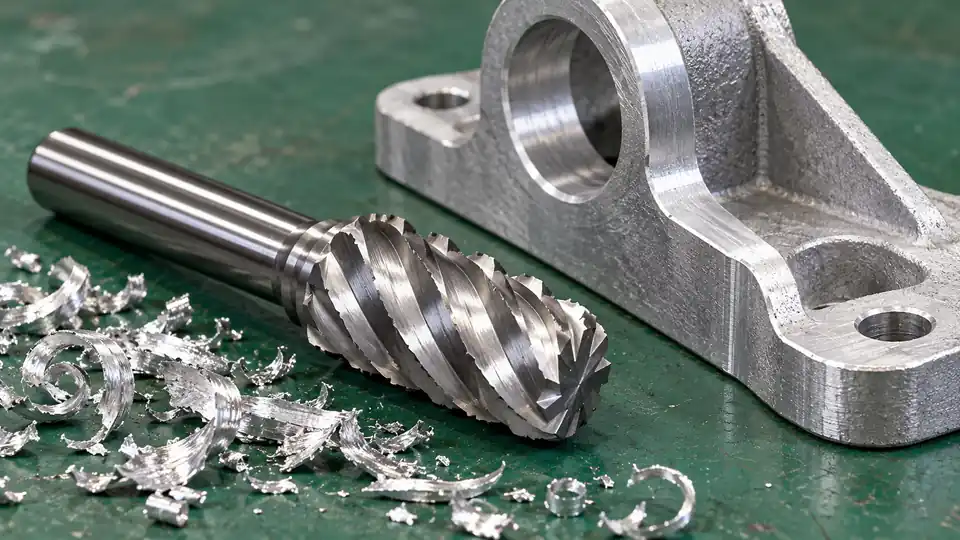
Aluminum can turn an ordinary rotary burr into a sticky, frustrating mess. The wrong tooth pattern loads with soft chips, the wrong shank will not fit the collet, and an oversized head can make a tight port or casting awkward to reach. That is why shoppers looking for the best carbide burrs for aluminum should start with the cutting pattern and tool compatibility rather than the number of pieces in a case.
Aluminum-cut burrs generally use wider flutes or a single-cut layout to create more room for chip removal. Shape matters just as much. Cylindrical heads suit flats and slots, tree and taper profiles reach corners and contours, while long-shank designs help with deep ports and recessed engine passages. A 1/4-inch shank is common on die grinders, while compact rotary tools often require a 3mm shank. The best overall fit here is the YUFUTOL five-piece aluminum-cut set because it combines documented aluminum suitability, several useful NF shapes, and a standard 1/4-inch shank.
Different buyers will rank these details differently. A fabricator may want a broad set for deburring castings, a Dremel owner may need the smaller 3mm format, and someone shaping an intake manifold may value reach above everything else. The recommendations below separate those use cases and flag limitations such as single-product packaging, long-shank handling, and unresolved machine requirements.
Quick Answer
- Best Overall: YUFUTOL Five-Piece Aluma Cut Set for its aluminum-specific NF shapes and standard 1/4-inch shank.
- Best Long-Shank Option: TJATSE Five-Piece Long-Shank Set for recessed ports and hard-to-reach areas.
- Best Compact Option: YUFUTOL 3mm Aluma Cut Set for small rotary tools and Dremel-style applications.
- Best Single Burr: YUFUTOL SL-4NF Taper Burr for tapered passages, contours, and radius work.
Best Carbide Burrs for Aluminum Comparison Table
| Product | Best For | Burr Shape Or Set | Cut Type | Shank Size | Documented Materials |
|---|---|---|---|---|---|
| YUFUTOL Five-Piece Aluma Cut Set | General aluminum work | Five NF shapes | Single cut | 1/4 inch | Aluminum, non-ferrous metals, wood, plastic |
| TJATSE Five-Piece Long-Shank Set | Deep ports and recesses | Five NF burrs | Single cut | 1/4 inch | Aluminum, non-ferrous metals, soft steel, reinforced plastic |
| JESTUOUS Four-Piece Set | Shape variety | Cylinder, radius, ball, tree | Single aluminum cut | 1/4 inch | Aluminum, copper, brass, plastic, wood |
| YUFUTOL 3mm Aluma Cut Set | Compact rotary tools | Ten burrs | Single cut | 3mm | Aluminum, non-ferrous metals, wood, plastic |
| YUFUTOL SL-4NF Taper Burr | Tapers and contours | Taper with radius end | Aluminum cut | 1/4 inch | Aluminum, non-ferrous metals, soft gummy materials |
| Sworker Long Burr Set | Engine passages | Long-shank set | Double cut | 1/4 inch | Aluminum, cast iron, steel |
| YUFUTOL SA5-NF Burr | Flat-bottom and slot work | Cylindrical | Single aluminum cut | 1/4 inch | Aluminum, non-ferrous metals, soft steel, wood |
| SpeTool Four-Piece Porting Set | Porting and polishing | Four NF shapes | Rapid-removal aluminum cut | 1/4 inch | Aluminum, plastic, zinc |
| Four-Piece Wide-Flute Set | Broad material removal | Four burrs, 10mm head | Wide-flute aluminum cut | 1/4 inch | Metal, wood, stone, steel, plastic |
The detailed reviews below match each burr to a particular material, shape, shank, or access requirement.
1. YUFUTOL Five-Piece Aluma Cut Set – Best Overall

For general aluminum work, this five-piece YUFUTOL set has the clearest combination of useful specifications. The listing identifies an Aluma Cut head, a 1/4-inch shank, a 3/8-inch head diameter, and a 3/4-inch flute length. Those dimensions put it in a practical middle ground for deburring, shaping edges, and opening up softer non-ferrous parts without committing to one specialty profile.
The set includes SA-3NF, SC-3NF, SD-3NF, and SL-3NF shapes, giving the buyer several ways to approach a corner, channel, or curved surface. Its single-cut layout is identified for rapid stock removal with reduced chip loading, a useful distinction for aluminum where packed chips can make a burr feel gummy. The 2.77-inch total length and 1/4-inch shank suit electric, pneumatic, and hydraulic die grinders listed by the manufacturer, although the exact collet still needs checking before purchase.
Pros
- Aluma Cut geometry is specifically identified for aluminum.
- Includes several NF shapes for varied contour and deburring work.
- Uses a documented 1/4-inch shank.
- Lists aluminum, non-ferrous metals, wood, and plastic as suitable materials.
- Comes in a storage case for carrying the set between jobs.
Cons
- The 3/8-inch head diameter and 3/4-inch flute length may be limiting for very large surfaces.
- Its 1/4-inch shank is unsuitable for tools that accept only 3mm accessories.
This is the most sensible starting point for a buyer who wants several aluminum-specific shapes in one standard-shank kit. A small rotary-tool owner should choose the 3mm YUFUTOL set instead, while deep engine-port work calls for a long-shank design. For general die-grinder work, however, the combination of documented geometry and shape range is difficult to overlook.
To buy this product, click here.
2. TJATSE Five-Piece Long-Shank Aluma Cut Set – Best Long-Shank Option

A normal burr can reach the mouth of an aluminum port and then stop short of the area that actually needs work. TJATSE addresses that problem with a 4.4-inch total-length design, while retaining a 1/4-inch shank and 3/8-inch head diameter. The five included NF burrs are identified for aluminum, non-ferrous metals, soft steel, reinforced plastics, and other softer materials.
The single-cut edge uses broad flutes intended to move larger chips away from the cutting area. That geometry makes sense for aluminum removal, particularly around recessed openings where clearing debris is awkward. The extra reach is the main attraction, though it also makes controlled handling more important than with a short burr. The listing includes a carry case and states a one-year replacement warranty, details that may matter to buyers who expect regular workshop use.
Pros
- Provides a documented 4.4-inch total length for recessed work.
- Uses a 1/4-inch shank compatible with the listed die-grinder format.
- Includes five NF aluminum-cut burrs.
- Single-cut flutes are identified for moving larger chips.
- Suitable materials include aluminum, non-ferrous metals, soft steel, and reinforced plastic.
Cons
- The long body is more specialized than a standard-length burr set.
- The listing does not provide individual shapes for all five included burrs.
Choose this set for porting, recessed cavities, and engine-related passages where ordinary burrs leave too much untouched metal. It is less attractive for small, close-up shaping because the long reach is the reason to buy it, not an advantage every task needs. Buyers should also follow the product instructions about maintaining contact with the workpiece during operation.
To buy this product, click here.
3. JESTUOUS Four-Piece Aluminum Cut Set – Best Shape Variety

Four burrs can be more useful than ten if the shapes are chosen well. This JESTUOUS set includes cylindrical, cylindrical-with-radius, ball, and tree-with-radius profiles. That spread covers straight material removal, curved transitions, rounded pockets, and tighter contour work, making it a practical kit for someone who moves between castings, brackets, and shaped aluminum parts.
The product is identified as a single-cut, wide-flute design for aluminum, copper, brass, plastic, wood, and other non-ferrous materials. Its solid carbide head and 1/4-inch shank keep the format familiar for common die grinders and compatible rotary tools. The listing does not provide individual head dimensions, so the buyer gets useful shape information without the same dimensional detail available on some competing burrs.
Pros
- Includes four distinctly described burr profiles.
- Uses a single aluminum-cut, wide-flute layout.
- Documents a standard 1/4-inch shank.
- Suitable for aluminum, copper, brass, plastic, wood, and non-ferrous materials.
- Combines straight, rounded, ball, and tree-style shaping options.
Cons
- Individual cutter and head dimensions are not supplied in the listing information.
- The four-piece assortment provides fewer duplicate shapes for repeated work.
This set suits a buyer who values profile variety more than maximum piece count. It is particularly appealing for mixed shaping and deburring where a cylindrical burr alone feels too blunt for the job. Someone working inside deep passages should step up to the TJATSE long-shank set, while a small 3mm tool requires a different shank format.
To buy this product, click here.
4. YUFUTOL 3mm Aluma Cut Set – Best Compact Option

A 1/4-inch burr is useless if the collet on the tool takes 3mm accessories. This ten-piece YUFUTOL set is aimed at that smaller format, with 3mm shanks and 6mm cut diameters. The listing identifies compatibility with Dremel-style and most small rotary tools, giving compact-tool users a clear alternative to the larger die-grinder sets above.
Every burr uses a single-cut layout intended for soft metals, aluminum, non-ferrous materials, wood, and plastic. The ten-piece count gives a small rotary-tool owner more pieces for detail carving and light shaping, while the included plastic case keeps the narrow shanks together instead of rattling loose in a drawer. The smaller dimensions also mean this is a precision-accessory category rather than a substitute for aggressive stock removal with a full-size die grinder.
Pros
- Uses a documented 3mm shank for small rotary tools.
- Includes ten carbide burrs.
- Lists 6mm cut diameters for the included burrs.
- Single-cut geometry is identified for aluminum and other soft materials.
- Includes a plastic storage case.
Cons
- The 3mm shank does not fit tools requiring a 1/4-inch collet.
- The 6mm cut diameter is smaller than the heads on several full-size sets.
This is the right direction for a hobbyist cleaning small aluminum parts, carving details, or working with a compact rotary tool. A fabrication task involving heavy removal or a deep engine passage calls for a larger head and stronger die-grinder format. Verify the tool collet before ordering, since shank size is the defining purchase decision here.
To buy this product, click here.
5. YUFUTOL SL-4NF Taper Burr – Best Tapered Profile

Some aluminum jobs need a controlled taper rather than a blunt cylinder. The YUFUTOL SL-4NF uses a tapered shape with a radius end, a 1/2-inch cutter diameter, a 1-1/8-inch cutter length, and a 1/4-inch shank. Its 14-degree cone gives the buyer a clear profile for angled openings, contours, and transitions where a straight burr can leave an abrupt step.
The listing identifies this burr for aluminum, non-ferrous materials, soft gummy materials, deburring, and polishing. It also describes smooth flute finishes for chip flow and gives a heat-treated tungsten carbide YG8 material designation. This is a single burr rather than a complete assortment, so its value depends on whether the taper and radius end match the work already on the bench.
Pros
- Uses a documented tapered shape with a radius end.
- Provides a 1/2-inch cutter diameter and 1-1/8-inch cutter length.
- Has a 14-degree cone for angled shaping.
- Is identified for aluminum, non-ferrous materials, deburring, and polishing.
- Uses a documented 1/4-inch shank.
Cons
- Only one burr is included.
- A tapered profile is less suitable than a cylinder for broad flat stock removal.
This burr makes sense as a targeted addition for contours, chamfers, and tapered cavities. It is a poor replacement for a varied set if the job changes shape constantly, but it can fill a very specific gap without buying another assortment. Buyers should match the 1/2-inch head and 1-1/8-inch cutting length to the access available around the aluminum part.
To buy this product, click here.
6. Sworker Long Carbide Burr Set – Best for Engine Passages

With a stated total length of 6.22 inches, this Sworker set is aimed at places where reach is the whole problem. The listing names cylinder heads, intake and exhaust manifolds, and other tight areas, while the included heads measure 8mm and 10mm. A 1/4-inch shank keeps the set in the common die-grinder category.
This set differs from the dedicated aluminum-cut products because its listed geometry is double cut. The product description presents that layout as producing a finer finish and smaller chips, while also identifying the burrs for aluminum, cast iron, and steel. That broader material range may appeal to engine work involving several metals, although the buyer should not treat a double-cut burr as automatically interchangeable with an aluminum-specific wide-flute burr.
Pros
- Provides a documented 6.22-inch total length.
- Includes 8mm and 10mm head sizes.
- Uses a standard 1/4-inch shank.
- Is identified for aluminum, cast iron, steel, and engine passages.
- Includes a storage box and instructions.
Cons
- Double-cut geometry differs from the single-cut aluminum designs in this roundup.
- The listing warns about bending risk if the long burr is run without continuous workpiece contact.
Pick this set for recessed automotive and fabrication work where a short burr simply cannot reach. For open aluminum surfaces, a shorter Aluma Cut set should be easier to manage and more directly matched to the material. The long body is useful, but it creates a distinct handling requirement that should remain part of the buying decision.
To buy this product, click here.
7. YUFUTOL SA5-NF Cylindrical Burr – Best Single Cylinder

A cylindrical burr is a straightforward tool for opening slots, leveling edges, and removing material from relatively accessible surfaces. This YUFUTOL SA5-NF has a 1/2-inch head diameter, a 1-inch flute length, a 2.77-inch total length, and a 1/4-inch shank. Those published dimensions make it easier to compare with a crowded work area before buying.
The single deeper flute is identified as a way to reduce debris clogging, while the aluminum-cut head is listed for aluminum, non-ferrous metals, soft steel, wood, and other non-metallic materials. It arrives as one burr in a transparent plastic tube, so this is a focused purchase rather than a shape assortment. Someone who already owns contour and radius burrs may appreciate that directness.
Pros
- Uses a clearly identified cylindrical SA5-NF profile.
- Provides a 1/2-inch head diameter and 1-inch flute length.
- Uses a 1/4-inch shank.
- Lists a single deeper flute for debris clearance.
- Is identified for aluminum, non-ferrous metals, soft steel, and wood.
Cons
- Only one burr is included.
- The cylindrical profile does not provide the contour variety of a multi-shape set.
This is a sensible choice for a buyer who knows a cylinder is the missing piece in the drawer. It can suit straight grooves and broad edges, while a taper or tree profile is better for corners and rounded transitions. The protective tube is convenient, but the single-burr format means it should be purchased for a defined task rather than general experimentation.
To buy this product, click here.
8. SpeTool Four-Piece Porting Set – Best for Porting and Polishing

SpeTool positions this four-piece set around aluminum porting and polishing, with SA-3NF, SC-3NF, SD-3NF, and SF-3NF burrs included. That assortment gives the buyer a documented set of NF shapes rather than a pile of identical cylinders. The 1/4-inch shank fits the common die-grinder format described in the listing.
The product is identified for aluminum, plastic, zinc, and other non-ferrous or non-metallic materials. Its rapid-stock-removal aluminum geometry is paired with minimum chip loading in the description. The listing does not provide the individual head diameters or flute lengths, so dimensional planning is less precise than with the single SA5-NF burr. Still, porting work often benefits from having several profiles available as a passage changes shape.
Pros
- Includes four named NF burr shapes.
- Is specifically identified for aluminum porting and polishing.
- Uses a documented 1/4-inch shank.
- Lists plastic and zinc among the supported non-ferrous materials.
- Uses carbide burrs intended for pneumatic accessories and die grinders.
Cons
- Individual burr dimensions are not stated in the available listing details.
- The set is focused on porting and polishing rather than compact rotary-tool use.
This set suits a buyer shaping passages who wants several profiles in one purchase and already has a compatible 1/4-inch tool. For a known straight groove, the YUFUTOL cylinder is more direct. For a small rotary tool, the 3mm YUFUTOL set avoids the shank mismatch that would otherwise stop the job before it starts.
To buy this product, click here.
9. Four-Piece 1/4-Inch Wide-Flute Set – Best Broad Removal Set
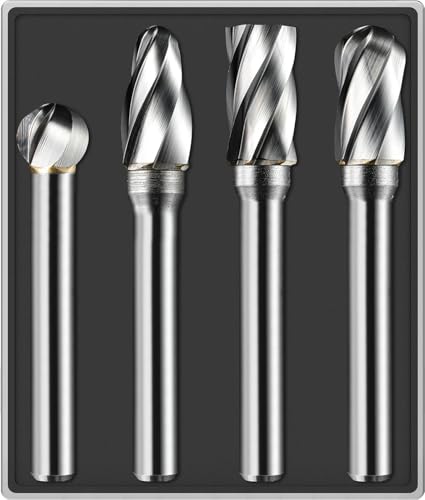
This four-piece set takes a broad-removal approach, with an aluminum-cut, wide-flute layout, 1/4-inch shanks, and 10mm head diameters. The larger head size is useful when the job involves clearing a fair amount of material from an accessible aluminum edge or casting rather than picking at a tiny recess.
The listing describes the burrs as suitable for metal, wood, stone, steel, concrete, welds, plastic, and other materials, with applications ranging from deburring and chamfering to porting and carving. It also identifies compatibility with several major die-grinder and rotary-tool brands, while clearly warning that the set does not fit a 6mm collet. The product information contains both wide-flute and double-cut references, so buyers should verify the exact cutting pattern shown for the selected listing before relying on one particular finish description.
Pros
- Uses a documented 1/4-inch shank.
- Provides 10mm head diameters for broad material removal.
- Uses an aluminum-cut, wide-flute format in the product title.
- Supports a wide range of listed metal and non-metal applications.
- Includes a storage case and manual.
Cons
- The 10mm head size may be too large for narrow slots and small cavities.
- The listing uses both wide-flute and double-cut descriptions, so the exact pattern deserves verification before purchase.
This set is a practical fit for open surfaces, casting cleanup, and general material removal where a 10mm head can work without crowding the part. A buyer focused on predictable NF shape names should choose one of the dedicated aluminum-cut assortments instead. The 6mm-collet restriction is especially important for compact rotary-tool owners.
To buy this product, click here.
Buying Guide
Choose Aluminum-Cut Geometry First
Aluminum is soft and can produce sticky chips, so the cut pattern matters more than a flashy piece count. The products above identify single-cut, wide-flute, or Aluma Cut layouts in different ways. A single-cut or wide-flute burr generally gives the chip more room than a tightly packed cutting pattern, but the exact geometry still varies by product. Read the listing carefully instead of assuming every carbide burr is intended for aluminum.
The guide to burr cut patterns and nonferrous geometry explains why aluminum calls for more than choosing a single- or double-cut label.
Match the Shank to the Collet
The most common mismatch in this category is a 1/4-inch burr purchased for a tool that accepts 3mm accessories. The YUFUTOL compact set uses 3mm shanks, while most of the other selections use 1/4-inch shanks. A tool brand name alone does not settle compatibility. Check the collet size, and do not assume a 6mm collet will accept a 1/4-inch shank.
Use Shape to Match the Work
Cylindrical burrs suit straight edges, slots, and broad surfaces. Tapered and tree profiles reach angled transitions, corners, and changing contours. Ball and radius-end burrs help with rounded shapes. A multi-shape set can be more useful than a larger quantity of one profile, especially for porting or irregular castings.
Decide Whether You Need Long Reach
Long-shank burrs make recessed areas accessible, which explains the appeal of the TJATSE and Sworker sets for ports and engine passages. The trade-off is handling. The Sworker listing specifically warns about bending risk if the burr is not kept in contact with the workpiece while the tool is running or stopping. For ordinary edge cleanup, a shorter burr is usually the more appropriate format.
Check the Head and Flute Dimensions
A 10mm head can remove material across a wider area than a 6mm head, but it may not enter a narrow cavity. A longer flute can reach farther along a passage, while a short flute may offer a more compact working area. Product listings provide different levels of dimensional detail, so compare head diameter, flute length, and total length before ordering.
Do Not Treat Every Burr as Universal
Several products list aluminum alongside steel, plastic, wood, or other materials. That broad list does not mean one burr is equally suited to every task. Aluminum-focused work should favor documented Aluma Cut geometry, while mixed-material engine work may call for the broader Sworker format. Keep the workpiece, access, shank, and burr profile aligned.
Best Carbide Burrs for Aluminum FAQ
What cut type is best for aluminum burrs?
For the products reviewed here, single-cut, wide-flute, and Aluma Cut designs are the most directly associated with aluminum. These patterns are presented as ways to support chip removal or reduce loading. The exact tooth geometry differs between models, so buyers should rely on the product’s stated cut type rather than assuming every single-cut burr has identical behavior.
Should I choose a 1/4-inch or 3mm shank?
Choose the shank that matches your tool collet. The 1/4-inch format appears throughout most of this roundup and is listed for compatible die grinders and larger rotary tools. The YUFUTOL ten-piece compact set uses 3mm shanks and is identified for Dremel-style and small rotary tools. These formats are not interchangeable.
Are long-shank carbide burrs better for aluminum?
Long-shank burrs are better suited to reach when the work area is recessed, such as an intake passage or deep cavity. They are not automatically better for open aluminum surfaces. The added length creates a different handling requirement, and the Sworker listing specifically warns about bending risk if the burr is run without continuous contact with the workpiece.
What burr shape should I use for aluminum edges?
A cylindrical profile is a practical starting point for straight edges, slots, and broad surfaces. A taper or tree shape is more suitable for angled transitions and contours. A ball or radius-end burr can help with rounded areas. If the work changes from one shape to another, a multi-profile set such as the JESTUOUS or YUFUTOL assortments may be more useful.
Can carbide burrs for aluminum cut steel too?
Some listings identify their products for both aluminum and steel, while others focus on aluminum, non-ferrous metals, plastic, or wood. The Sworker long set lists aluminum, cast iron, and steel, while the YUFUTOL aluminum-focused sets list softer and non-ferrous materials. Check the individual product description rather than transferring one burr’s material claims to another.
Can a 1/4-inch burr fit a 6mm collet?
The four-piece wide-flute listing specifically states that its 1/4-inch shank does not fit a 6mm collet. Although the dimensions are close, the listing’s compatibility warning should be treated as decisive. Confirm the exact collet specification before purchase.
Is a larger burr head always better for aluminum removal?
A larger head can cover more surface area, but it may not fit a narrow slot, corner, or recessed passage. The wide-flute set uses 10mm heads, while the compact YUFUTOL set lists 6mm cut diameters. Select the head size based on access and the shape of the workpiece, not quantity alone.
Final Verdict
The YUFUTOL five-piece Aluma Cut set is the strongest overall match for aluminum because its listing clearly identifies aluminum suitability, a single-cut layout, several NF shapes, and a standard 1/4-inch shank. It gives a buyer more shaping flexibility than a single cylindrical or tapered burr without moving into the special handling demands of an extra-long tool.
For recessed engine and porting work, the TJATSE long-shank set is the more focused alternative. The YUFUTOL 3mm set is the practical route for compact rotary tools, while the SL-4NF makes sense when a tapered radius profile is the missing tool. Check the collet, head dimensions, cut type, and intended material before ordering, then match the burr to the actual access and shape of the aluminum part.
