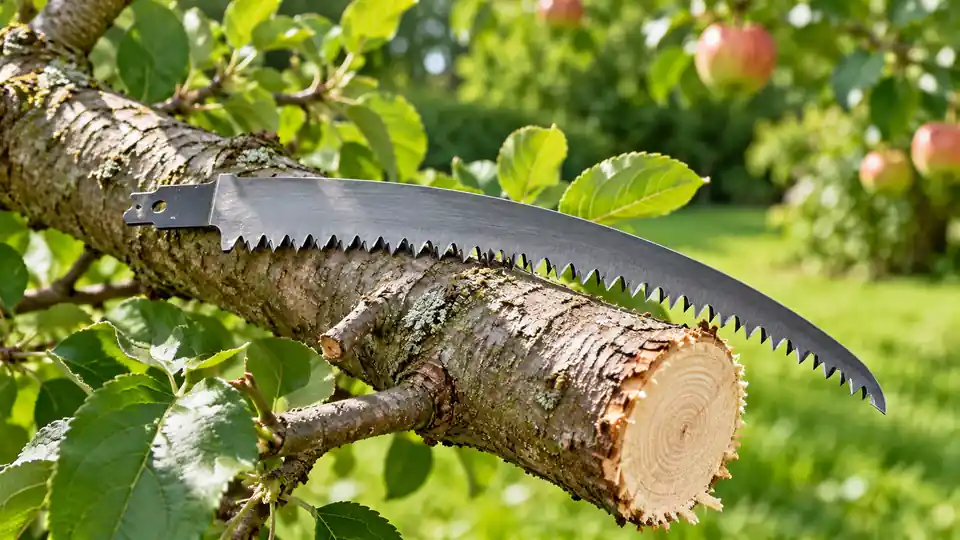
Pruning with a reciprocating saw is a fast way to clear storm-damaged limbs, remove deadwood, or cut back an overgrown tree, but the blade matters more than many buyers expect. A general-purpose wood blade may have teeth that are too fine for wet branches, while an extra-long blade can feel awkward on small shrubs. The key specifications here are tooth count, blade length, tooth shape, cutting capacity, and shank compatibility.
Most pruning options in this group use coarse 5TPI or 6TPI tooth patterns. That spacing leaves room for chips and suits rough cutting through green wood, dry branches, firewood, and similar materials. Arc-edge designs add a curved profile intended to keep more of the blade engaged with round branches, while shorter 6-inch and 9-inch blades are easier to control in tight garden spaces. Buyers should also check whether the listing supports their particular saw. Several EZARC models specifically exclude Ryobi tools, while other listings state broader compatibility.
The EZARC 15-inch Arc Edge blade with Japanese teeth is the strongest overall match for thick limbs because it combines a long working length, 6TPI teeth, deep gullets, and a stated cutting capacity of up to 300 mm. Buyers focused on price, compact handling, wet wood, or frequent blade changes may prefer one of the shorter or larger-pack alternatives below.
Quick Answer
- Best Overall: EZARC 15-Inch Arc Edge 6TPI Blades for larger branches and a documented working length of 320 mm.
- Best for Wet and Green Wood: EZARC 15-Inch U-Groove Blades for their stated chip-evacuation design and 300 mm cutting capacity.
- Best Budget Pack: 12-Inch 5TPI Wood Pruning Blades for buyers who need five coarse-tooth replacement blades.
- Best Compact Option: 6-Inch 5TPI Wood Pruning Blades for shrubs, smaller branches, and tighter cutting areas.
Best Reciprocating Saw Blades for Pruning Comparison Table
| Product | Best For | Length | Teeth | Construction | Documented Fit |
|---|---|---|---|---|---|
| EZARC 15-Inch Arc Edge | Large limbs | 15 in. | 6TPI | Japanese teeth, fleam ground | Most major brands, not Ryobi |
| 12-Inch Wood Pruning Blades | Budget replacement supply | 12 in. | 5TPI | HCS | Major brands |
| 12-Inch Japanese Teeth Set | Frequent pruning | 12 in. | 6TPI | Heat-treated steel | Most major brands |
| 6-Inch Wood Pruning Blades | Compact garden work | 6 in. | 5TPI | Heat-treated steel | Most reciprocating saws |
| 9-Inch Japanese Teeth Blades | Medium branches | 9 in. | 6TPI | Chrome vanadium steel | Most standard systems |
| EZARC 15-Inch U-Groove | Wet and green wood | 15 in. | 6TPI | Fleam ground, U-groove | Most major brands, not Ryobi |
| VICRING 9-Inch Blades | General wood pruning | 9 in. | 5TPI | High carbon steel | All major brands stated |
| 12-Inch HCS Blades with Case | Green wood and plastic | 12 in. | 5TPI | Heat-treated HCS | Major brands, including Ryobi |
| EZARC 12-Inch Arc Edge | Thick branches | 12 in. | 6TPI | Chrome vanadium steel | Most standard systems |
The detailed picks below separate long-reach blades from compact options, and coarse 5TPI designs from the more specialized 6TPI arc-edge models.
1. EZARC Arc Edge 15-Inch 6TPI Pruning Blades – Best Overall

Long branches are where this EZARC set makes the most sense. Its 15-inch blade length and 320 mm working length provide more reach than the 9-inch and 12-inch options, which can help when a limb is awkwardly positioned or too broad for a shorter blade. The 6TPI Japanese-style tooth pattern is coarse enough for rough wood cutting, and the listing identifies deep gullets for clearing chips as the blade advances.
The arc-edge profile and triple-ground offset teeth are intended to provide multiple cutting angles through rounded limbs. That geometry may appeal to someone trimming a mature branch where a flat, short blade tends to bind or loses contact. The documented cutting range includes wet wood, dry wood, green timber, and firewood up to 300 mm in diameter. Compatibility is broad across major brands, but Ryobi is specifically excluded, so that detail belongs at the top of the shopping checklist.
Pros
- 15-inch blade provides long reach for larger limbs.
- 6TPI Japanese-style teeth suit coarse wood pruning.
- Arc-edge profile is intended for rounded branches.
- Deep gullets are identified for chip removal.
- Documented working length is 320 mm, with capacity up to 300 mm.
Cons
- The listing specifically says it is not compatible with Ryobi reciprocating saws.
- The extra-long profile may be cumbersome for small shrubs or tight spaces.
This is the best fit for buyers who regularly face thick limbs and want reach more than compact handling. A shorter 9-inch blade will feel easier around dense branches, while a 5TPI pack may make more sense for occasional pruning and frequent blade replacement.
To buy this product, click here.
2. 12-Inch 5TPI Wood Pruning Reciprocating Saw Blades – Best Budget Pack

A five-pack of 12-inch blades is a practical answer for routine yard maintenance, especially when the job involves several branches and you would rather swap blades than stop to nurse a dull edge. The listing identifies high-carbon steel construction and a 5TPI pattern, a familiar coarse setup for fast, rough cutting in wood. The 12-inch length gives useful reach without moving into the more unwieldy territory of a 15-inch blade.
There is no arc-edge or Japanese-tooth feature documented here, so this set is best understood as a straightforward replacement option. It suits a homeowner cutting limbs, pruning trees, or handling general outdoor wood work. A clear storage case is included, which helps keep loose teeth away from tool bags and makes it easier to find an unused blade after a muddy afternoon outside.
Pros
- Five blades provide a useful replacement supply.
- 12-inch length balances reach and handling.
- 5TPI pattern is intended for rough wood cutting.
- High-carbon steel construction is documented.
- Includes a clear storage case.
Cons
- The listing does not document an arc-edge profile or Japanese tooth geometry.
- Cutting capacity by branch diameter is not clearly specified.
Choose this set for ordinary pruning where quantity matters more than specialized blade geometry. Buyers working through very thick, wet limbs may prefer one of the 6TPI arc-edge products with a documented capacity and more detailed tooth design.
To buy this product, click here.
3. 12-Inch Japanese Teeth Arc Edge Pruning Blades – Best Five-Pack Upgrade

This five-pack sits between basic replacement blades and the longer EZARC designs. Each blade uses a 12-inch format with 6TPI Japanese-style teeth, an arc edge, and deep gullets. That combination is aimed at branches, green wood, wet wood, and logs where chip buildup can make a cut feel sluggish. The five-blade quantity is useful for gardeners and landscapers who expect repeated seasonal pruning rather than one quick cleanup.
The listing also identifies heat-treated construction and a standard reciprocating saw shank. Heat treatment is presented as part of the blade construction, but the product information does not provide independent wear testing, so buyers should treat the advertised longevity as a manufacturer claim rather than a guarantee. The curved profile may help maintain contact on round limbs, while the 12-inch length remains easier to place than a 15-inch blade.
Pros
- Five-pack supports repeated pruning work.
- 6TPI Japanese-style teeth are specified.
- Arc edge is intended to reduce binding on round wood.
- Deep gullets are identified for clearing chips.
- Standard shank fits most major reciprocating saw brands.
Cons
- The listing does not state a maximum branch diameter.
- It is longer than compact blades suited to shrubs and narrow spaces.
This set is a strong middle-ground pick for buyers who want arc-edge geometry and a healthy blade supply without moving to a three-pack. For one or two large limbs, the 15-inch EZARC options provide more documented reach.
To buy this product, click here.
4. 6-Inch 5TPI Wood Pruning Reciprocating Saw Blades – Best Compact Option

A short blade can be the calmer, cleaner choice around shrubs, thin limbs, and crowded branches. This six-pack uses a 6-inch length and 5TPI teeth, giving it a compact footprint compared with the 9-inch, 12-inch, and 15-inch alternatives. If a long blade keeps bumping neighboring branches or flexing in a confined space, this format is easier to position.
The product listing identifies fleam-ground teeth, deep gullets, heat-treated steel, and bi-directional cutting. Those details point toward a blade intended for rough pruning rather than fine finish cuts. The organizer case adds a small but useful convenience, since six short blades can otherwise disappear under gloves, rope, and garden debris in a tool bag.
Pros
- Six-inch length suits compact pruning areas.
- Six blades provide a generous replacement supply.
- 5TPI teeth are intended for wood pruning.
- Deep gullets are specified for chip removal.
- Includes an organizer case.
Cons
- Short length limits reach on thick or recessed limbs.
- The listing does not specify a maximum cutting diameter.
This is the sensible choice for small trees, shrubs, and branches where control matters more than reach. It is a poor substitute for a long blade when the branch is broad or positioned beyond comfortable saw access.
To buy this product, click here.
5. 9-Inch Japanese Teeth Arc Edge Pruning Blades – Best for Medium Branches

The nine-inch EZARC-style blade targets the space between light garden pruning and large-limb work. Its 6TPI Japanese-style teeth, arc edge, and deep gullets give it a more specialized profile than a basic 5TPI carbon-steel blade, while the shorter length remains manageable around a tree crown. That makes it appealing for branches that are too substantial for a compact six-inch blade but do not call for a 15-inch reach.
Chrome vanadium steel construction is identified in the listing, along with a universal shank intended for standard reciprocating saw systems. The arc edge and triple-ground offset tooth structure are described as providing multiple cutting angles. Buyers should still match the blade length to the branch diameter and saw position, because a curved pruning blade is not a guarantee against binding or bending in every cut.
Pros
- 9-inch length suits medium-size branches.
- 6TPI Japanese-style tooth profile is documented.
- Arc edge supports contact with rounded limbs.
- Chrome vanadium steel construction is specified.
- Deep gullets are intended to move wood chips.
Cons
- The three-pack offers fewer replacements than several five- or six-packs.
- The listing does not state a precise cutting-capacity limit.
Pick this set when a 15-inch blade feels excessive but a six-inch blade leaves too little working room. Buyers who regularly cut especially wet or resinous wood may favor the U-groove EZARC design instead.
To buy this product, click here.
6. EZARC Arc Edge 15-Inch U-Groove 6TPI Blades – Best for Wet and Green Wood

Fresh branches can be sticky, fibrous, and messy, which is why this version deserves a separate look from the standard 15-inch EZARC blade. The listing identifies a U-groove design intended to improve chip evacuation in wet, green, and resinous wood. It also keeps the long 15-inch format, 6TPI teeth, arc edge, and stated cutting capacity of up to 300 mm.
For a homeowner cutting storm-felled green limbs, the combination of reach and documented chip-clearance geometry is attractive. Deep gullets and fleam-ground teeth are also listed, while the triple-ground offset teeth are intended to provide several cutting angles. Compatibility is again broad across major brands, but Ryobi is specifically excluded. That restriction is more significant than the blade’s appealing feature list if the saw uses a Ryobi mounting system.
Pros
- U-groove design is specifically identified for chip evacuation.
- 15-inch blade provides a 320 mm working-length class of reach.
- 6TPI pattern suits green and wet wood.
- Documented capacity reaches up to 300 mm.
- Arc edge and fleam-ground teeth are specified.
Cons
- Not compatible with Ryobi reciprocating saws according to the listing.
- Long blade length is less convenient for small, dense shrubs.
This is the specialized choice for buyers who frequently cut fresh or resinous wood and want a long blade. For mostly dry branches, the standard EZARC 15-inch model offers a similar overall format without the U-groove emphasis.
To buy this product, click here.
7. VICRING 9-Inch 5TPI Wood Pruning Blades – Best General-Purpose Pack

The VICRING set keeps things straightforward: nine inches, 5TPI, high-carbon steel, and five blades in the pack. That format makes sense for routine tree pruning, small logs, and general wood cutting where buyers want a moderate blade length and several replacements. The listing also mentions plastic pipe use, although wood pruning remains the central application.
A stated HRC48-52 hardness range appears in the product information, but blade life is also described as dependent on the material being cut. That qualification matters because a blade used on clean wood faces a different job from one pushed into dirty, hardened, or contaminated material. The listing says the shank suits all major reciprocating saw brands, giving this set broad stated compatibility.
Pros
- Five-blade pack supports repeated outdoor work.
- 9-inch length offers a middle-ground format.
- 5TPI tooth pattern is intended for wood pruning.
- High-carbon steel construction is documented.
- Listing states compatibility with major saw brands.
Cons
- The product does not include the arc-edge geometry found on several alternatives.
- Cutting capacity varies with material hardness and is not a fixed performance guarantee.
This pack suits general yard maintenance where a moderate length and simple coarse tooth pattern are enough. Buyers seeking a specialized wet-wood profile or a documented large-limb capacity should move toward the arc-edge options.
To buy this product, click here.
8. 12-Inch 5TPI HCS Pruning Blades with Storage Case – Best for Broad Saw Compatibility

This five-pack is aimed at buyers who want a familiar 12-inch blade for green wood, branches, roots, fuel wood, and plastic pipe. Its 5TPI pattern is coarse enough for rough outdoor cutting, while the heat-treated high-carbon steel construction is identified in the listing. The product specifically warns against wood with nails, a useful boundary for anyone tempted to use a pruning blade during demolition work.
The standard 1/2-inch universal shank is listed as compatible with major brands including Ryobi, DeWalt, Makita, Milwaukee, Porter-Cable, Black+Decker, Bosch, and Hitachi. That makes this set especially useful for buyers who have a Ryobi saw and need an option without the EZARC compatibility restriction. A locking clear case rounds out the practical design and keeps the five blades together.
Pros
- 12-inch length provides useful reach for tree limbs.
- 5TPI teeth are intended for aggressive rough cutting.
- Heat-treated HCS construction is documented.
- Listing includes compatibility with Ryobi and other major brands.
- Storage case has a stated locking design.
Cons
- The listing says it is not recommended for wood containing nails.
- No arc-edge profile or maximum branch diameter is specified.
This is a practical choice for broad compatibility, especially when Ryobi support is necessary. Buyers wanting arc-edge control, Japanese-style teeth, or a stated large-branch capacity should choose a more specialized model.
To buy this product, click here.
9. EZARC Arc Edge 12-Inch 6TPI Pruning Blades – Best for Thick Branches Without Extra Reach

This 12-inch EZARC set borrows the arc-edge approach of the longer models while keeping the overall blade shorter. The listing gives a 250 mm working length and a cutting capacity of up to 250 mm, making the product easier to match with medium-to-large branches than a six-inch or nine-inch blade. Its 6TPI Japanese-style tooth profile, deep gullets, and fleam-ground teeth are intended for wet wood, dry wood, green timber, and firewood.
Chrome vanadium polished steel is identified as the blade material, and the curved shape is described as helping leverage and binding control. The listing recommends a push-pull sawing motion on large tree trunks to clear debris and reduce gumming. That guidance highlights the blade’s intended rough-cutting role. It is a three-pack, so buyers who prune continuously may prefer one of the five-pack options.
Pros
- 12-inch length balances reach and maneuverability.
- 6TPI Japanese-style teeth suit coarse wood cutting.
- Arc edge is intended for controlled cuts through limbs.
- Documented working length is 250 mm.
- Listing states capacity up to 250 mm in wet, dry, and green wood.
Cons
- The three-pack supplies fewer replacement blades than several alternatives.
- The listing does not identify compatibility with every individual saw model.
This is a sensible pick for medium-to-large branches when a 15-inch blade feels excessive. It also gives buyers a more clearly stated capacity than several basic 9-inch and 12-inch packs, while the three-blade quantity remains its main trade-off.
To buy this product, click here.
Buying Guide
Match Blade Length to the Branch
Blade length affects reach, placement, and control. A six-inch blade can be handy among shrubs and thin branches, where a 15-inch blade may knock into surrounding growth. A 12-inch blade is a versatile middle point, while 15-inch models are better suited to broad limbs or cuts that require more reach. Length is not the same as cutting capacity, so use the documented working length and diameter information where available.
Understand 5TPI and 6TPI
Both tooth patterns are coarse pruning configurations. A 5TPI blade has slightly more open spacing, while a 6TPI blade places the teeth somewhat closer together. The difference is modest, but tooth spacing affects how a blade engages wood and clears chips. For rough outdoor cutting, either can be appropriate. The rest of the geometry, including gullets, tooth shape, and arc profile, also matters.
Look at Arc Edge and Tooth Geometry
Arc-edge blades use a curved cutting profile intended to keep contact with rounded limbs. Several products here pair that shape with Japanese-style or fleam-ground teeth. Basic HCS pruning blades may be perfectly adequate for routine branch cutting, but they do not offer the same documented geometry. Buyers cutting many round, thick limbs may prefer an arc-edge model, while occasional users may value a larger pack of simpler blades.
Check Your Saw’s Shank Compatibility
A pruning blade must lock securely into the reciprocating saw before cutting begins. Most products describe a standard or universal shank and list several major brands. That wording still deserves a careful match against the saw’s instructions. The EZARC 15-inch listings specifically exclude Ryobi, while the 12-inch HCS set explicitly includes Ryobi among its compatible brands.
Choose the Pack Size for the Job
Three-blade packs suit occasional pruning or buyers who prefer a more specialized blade. Five- and six-blade packs are more practical for seasonal cleanup, rental-tool use, or jobs where dirt and rough conditions can shorten blade life. A larger pack does not establish better cutting performance, but it does reduce interruptions when several branches need attention.
Wet, Green, and Dirty Wood
Green and wet wood can fill tooth gullets with chips and resin. The EZARC U-Groove model specifically identifies chip evacuation for wet and resinous wood, while several other products list deep gullets. Avoid extending those descriptions into guarantees. Wood conditions vary, and the saw, cutting motion, branch diameter, and debris all affect the cut.
Do Not Use a Pruning Blade for Every Wood Task
These products are described for wood pruning and related rough cutting. One listing specifically says its blades are not recommended for wood with nails. A pruning blade should not be treated as a universal demolition blade simply because it fits the same saw. Check the product limitations before cutting contaminated timber, plastic, or any material outside the documented applications.
The reciprocating-blade guide explains pruning-blade selection and full-stroke clearance while keeping green wood separate from nail-embedded demolition work.
Best Reciprocating Saw Blades for Pruning FAQ
What TPI Is Best for Pruning?
Coarse 5TPI and 6TPI blades are the main options in this roundup. They are intended for rough wood cutting and leave more space between teeth than a fine-tooth blade. Choose based on the complete design, including blade length, tooth geometry, gullets, and the type of branches you cut.
Are Longer Reciprocating Blades Better for Tree Limbs?
Longer blades provide more reach and can suit broad limbs, but they may be harder to control in dense growth. The 15-inch models here have documented working lengths of 320 mm, while the 12-inch EZARC model lists a 250 mm working length. A shorter blade may be the better choice when the branch is accessible and the surrounding space is tight.
Can These Blades Cut Wet or Green Wood?
Several listings identify wet wood, green timber, or fresh wood as suitable applications. The EZARC U-Groove model places particular emphasis on wet and resinous wood. Actual cutting behavior still depends on branch size, moisture, resin, debris, and saw operation, so a stated application should be treated as product guidance rather than a guaranteed result.
Will These Blades Fit a Ryobi Reciprocating Saw?
Compatibility varies by product. The EZARC 15-inch listings specifically state that they are not compatible with Ryobi reciprocating saws. The 12-inch HCS set identifies Ryobi among its compatible brands. Check the exact blade listing and your saw documentation before ordering.
Is a 6TPI Blade Better Than a 5TPI Blade?
Neither pattern is automatically better for every pruning job. A 5TPI blade provides a more open tooth pattern, while a 6TPI option may pair with specialized Japanese-style teeth, arc edges, or deep-gullet designs. Branch diameter, wood condition, blade length, and saw compatibility are equally important.
What Is an Arc-Edge Pruning Blade?
An arc-edge blade has a curved cutting profile rather than a straight one. The products in this roundup describe the design as providing more contact and multiple cutting angles on rounded branches. It may appeal to buyers who regularly cut thick limbs, but it does not remove the need to match the blade to the saw and branch size.
How Many Pruning Blades Should I Buy?
Occasional users may have enough with a three-pack, especially when choosing a specialized 12-inch or 15-inch blade. Five- and six-packs are more convenient for large yard projects or recurring seasonal work. Pack quantity should be weighed against the blade’s length, geometry, compatibility, and documented application.
Can a Pruning Reciprocating Blade Cut Wood with Nails?
Do not assume it can. The 12-inch HCS listing specifically says its blades are not recommended for wood with nails. Other products in this roundup do not establish nail-cutting capability, so a suitable blade should be selected only when the manufacturer clearly supports that task.
Final Verdict
The EZARC 15-inch Arc Edge 6TPI set is the strongest overall pick for buyers focused on large branches. Its 320 mm working length, 6TPI Japanese-style teeth, deep gullets, arc-edge profile, and documented capacity up to 300 mm give it the clearest fit for substantial pruning. The U-Groove version is more specialized for wet and green wood, while the 12-inch EZARC blade offers a shorter format with a stated 250 mm capacity.
For budget-minded buyers, the five-pack of 12-inch 5TPI blades provides a straightforward supply of coarse wood-pruning blades. The six-inch set is easier to manage in tight garden growth, and the 12-inch HCS case set is the safer compatibility choice for buyers who need a product listing that includes Ryobi. Match the blade length to the branch, verify the shank fit, and treat stated material applications as limits rather than invitations to use a pruning blade on every cutting task.
