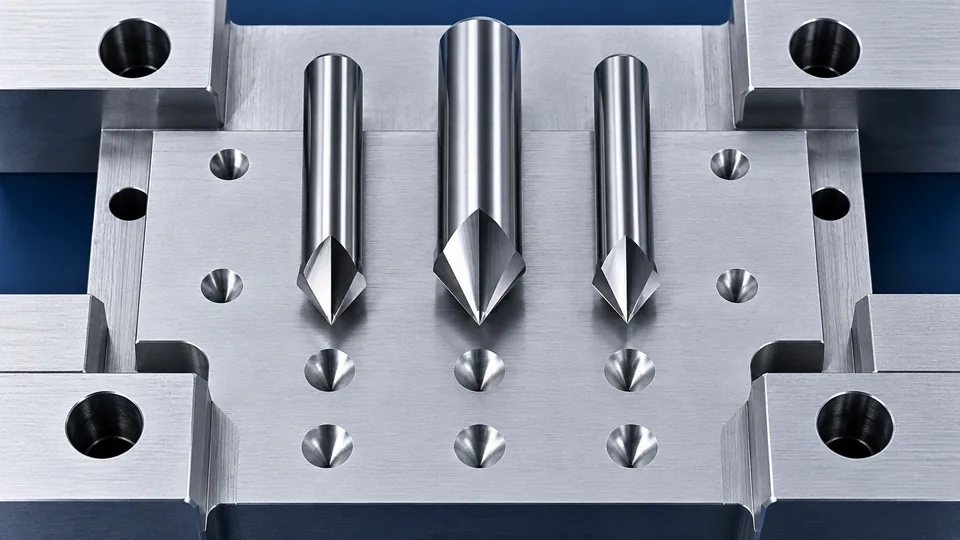
A carbide spotting drill starts the next drilling operation with a shallow, accurately located spot. These nine spotting-tool options cover 90-, 120-, 140-, and 142-degree points, with lathe center drills excluded.
Compare the 9 picks below by their dimensions, application, and compatibility. Match the configuration to your equipment and the job before comparing package quantity.
Quick Answer
- Best Overall: 2Pcs 1/4" 2 Flute 120 Degree Solid Carbide Spot Drill — 1/4 inch; 120 degrees; 1/4 inch; AlTiN.
- Best Small 90-Degree Option: 5Pcs 3/16" 2 Flute 90 Degree Solid Carbide Spot Drill — 3/16 inch; 90 degrees; 3/16 inch; AlTiN.
- Best 90-Degree General Option: 2Pcs 1/4" 2 Flute 90 Degree Solid Carbide Spot Drill — 1/4 inch; 90 degrees; 1/4 inch; AlTiN.
Best Carbide Spotting Drills Comparison Table
| Product | Best For | Key Specifications | Fit and Application |
|---|---|---|---|
| 2Pcs 1/4" 2 Flute 120 Degree Solid Carbide Spot Drill | Overall | 1/4 inch; 120 degrees; 1/4 inch; AlTiN | This is the best starting point for buyers who need a conventional 1/4-inch CNC spotting drill and can verify that their toolholder accepts the matching shank. Choose a 90-degree model for a different point requirement, or move to the 3/8-inch options for a larger opening. here . |
| Titan TC18916 1/4-Inch 140-Degree Carbide Spot Drill | 140-Degree Option | 1/4-inch diameter and shank; 140-degree point; 3/8-inch flute; 3-inch overall | Choose the Titan when its 140-degree point suits the following drill and the spindle accepts its 1/4-inch shank. |
| 5Pcs 3/16" 2 Flute 90 Degree Solid Carbide Spot Drill | Small 90-Degree Option | 3/16 inch; 90 degrees; 3/16 inch; AlTiN | Pick this set for smaller 90-degree spotting work where having five matching tools is useful. A 1/8-inch model is more compact, while a 1/4-inch tool provides a larger specified cutting diameter, so the next drilling step should determine which size makes sense. here . |
| 2Pcs 3/8in Solid Carbide Spotting Drill, 90 Degree | Large 90-Degree Option | 3/8 inch; 90 degrees; 3/8 inch; AlTiN | This pair suits a CNC operator who specifically needs a larger 90-degree spot and has the holder capacity to match. Buyers working with small hole locations or limited clearance should step down in diameter, while those needing 120 degrees should choose the similarly sized 120-degree model. here . |
| 2Pcs 1/4" 2 Flute 90 Degree Solid Carbide Spot Drill | 90-Degree General Option | 1/4 inch; 90 degrees; 1/4 inch; AlTiN | This is the straightforward pick for a 1/4-inch holder when the required geometry is 90 degrees. Choose the 120-degree version if that point angle is specified, or use the 3/16-inch option for a smaller matching shank and cutting diameter. here . |
| 5Pcs 1/8" 2 Flute 90 Degree Solid Carbide Spot Drill | Compact Option | 1/8 inch; 90 degrees; 1/8 inch; AlTiN | Choose this five-piece pack for a 1/8-inch, 90-degree spotting operation. Match the point angle to the following drill and the shank to the collet. |
| KEO 34144 1/4-Inch 142-Degree Carbide Spot Drill | 142-Degree Option | 1/4-inch body; 142-degree point; 2-1/2-inch overall; uncoated carbide | Choose the KEO for a compatible 142-degree spotting operation after matching the following drill’s point angle. |
| 2Pcs 3/8" 2 Flute 120 Degree Solid Carbide Spot Drill | Large 120-Degree Option | 3/8 inch; 120 degrees; 3/8 inch; AlTiN | This model is the better fit for a larger 120-degree starting feature and a machine equipped for a 3/8-inch shank. Buyers needing the same angle in a more compact format should look at the 1/4-inch or 5/16-inch versions instead. here . |
| 2Pcs 5/16" 2 Flute 120 Degree Solid Carbide Spot Drill | Mid-Size 120-Degree Option | 5/16 inch; 120 degrees; 5/16 inch; AlTiN | This is a sensible pick for a mid-size 120-degree spotting requirement that falls between the two more common diameters. Choose the 1/4-inch model for a smaller holder or the 3/8-inch model for a larger starting feature. here . |
1. 2Pcs 1/4" 2 Flute 120 Degree Solid Carbide Spot Drill — Best Overall

A 1/4-inch cutting diameter and matching 1/4-inch shank make this pair a practical middle ground for many CNC setups. The two-flute solid carbide design has a 3/4-inch flute length and 2-1/2-inch overall length, so the product description gives buyers the dimensions needed to check clearance and collet fit before ordering. Its 120-degree point separates it from the 90-degree tools elsewhere in this roundup.
The AlTiN coating is identified for harder materials or high-temperature applications, while the specified material range includes steel, brass, iron, and nonferrous materials of medium hardness. That does not make the tool universal, but it gives this pair a useful general-purpose role. A machinist setting up repeated hole locations can keep one tool ready for common work without jumping immediately to a tiny or oversized diameter.
Pros
- Solid carbide construction is clearly identified.
- Uses a practical 1/4-inch cutting diameter and 1/4-inch shank.
- Two-flute, 120-degree geometry is specified.
- AlTiN coating is specified for harder materials or high-temperature applications.
- Listed for steel, brass, iron, and nonferrous materials of medium hardness.
Cons
- The 120-degree point may not match a setup that specifically requires a 90-degree spotting angle.
- Use the tool maker’s cutting guidance for the exact material and machine.
This is the best starting point for buyers who need a conventional 1/4-inch CNC spotting drill and can verify that their toolholder accepts the matching shank. Choose a 90-degree model for a different point requirement, or move to the 3/8-inch options for a larger opening. here .
To buy this product, click here.
2. Titan TC18916 1/4-Inch 140-Degree Carbide Spot Drill — Best 140-Degree Option

The Titan TC18916 is a solid-carbide spotting drill with a 140-degree point, a 1/4-inch body and shank, and a 3-inch overall length. Its 3/8-inch flute length is intended for spotting rather than drilling a full-depth hole.
The wider point angle gives this tool a different role from the 90- and 120-degree picks. Select the spotting angle around the following drill’s point geometry so the drill starts at the center as intended. It is a spotting tool, rather than a pilot-and-countersink center drill for supporting work between lathe centers.
Pros
- 140-degree spotting point.
- Solid-carbide construction.
- 1/4-inch mounting shank.
- 3/8-inch flute length.
- 3-inch overall tool length.
Cons
- Point angle must suit the following drill.
- Uncoated construction may not suit every material setup.
Choose the Titan when its 140-degree point suits the following drill and the spindle accepts its 1/4-inch shank.
To buy this product, click here.
3. 5Pcs 3/16" 2 Flute 90 Degree Solid Carbide Spot Drill — Best Small 90-Degree Option

The 3/16-inch version is aimed at smaller hole-starting work, with a matching 3/16-inch shank and a 90-degree point. Its 3/4-inch flute length and 2-inch overall length are shorter than the 1/4-inch, 2-1/2-inch format found in several other picks. That compact dimensional profile may simplify a setup where a smaller tool is preferred, though clearance still needs to be checked against the machine.
Five pieces make this a useful format for a shop that wants replacements available for repeated operations. The product description identifies solid carbide, two flutes, AlTiN coating, and use in steel, brass, iron, and nonferrous materials of medium hardness.
Pros
- Provides a specified 3/16-inch cutting and shank diameter.
- Uses a 90-degree point angle.
- Includes five spot drills.
- Solid carbide construction is specified.
- AlTiN coating and two-flute geometry are specified.
Cons
- The 3/16-inch shank limits use to compatible collets or holders.
- A 90-degree point may not suit a process specified around 120-degree geometry.
Pick this set for smaller 90-degree spotting work where having five matching tools is useful. A 1/8-inch model is more compact, while a 1/4-inch tool provides a larger specified cutting diameter, so the next drilling step should determine which size makes sense. here .
To buy this product, click here.
4. 2Pcs 3/8in Solid Carbide Spotting Drill, 90 Degree — Best Large 90-Degree Option

This pair moves up to a 3/8-inch cutting diameter and a matching 3/8-inch shank, making it one of the larger dedicated spot drills in the group. The 90-degree point and 1-inch length of cut give it a different role from the smaller 3/16-inch and 1/8-inch tools. Overall length is listed as 2-1/2 inches, so the holder and machine must have room for that format.
The two-flute, solid carbide construction is AlTiN coated, and the product description identifies general-purpose milling in steel, brass, iron, and nonferrous materials of medium hardness. It also references an HRC range, but that should be treated as product description information rather than a universal promise for every workpiece or setup. A buyer choosing this model should confirm both the larger shank capacity and the desired point angle first.
Pros
- Offers a specified 3/8-inch cutting diameter.
- Uses a matching 3/8-inch shank.
- Provides a 90-degree point for the specified spotting geometry.
- Includes a 1-inch length of cut.
- AlTiN-coated, two-flute solid carbide construction is specified.
Cons
- The 3/8-inch shank requires a larger compatible toolholder than the smaller picks.
- The larger cutting diameter may be excessive for small pilot-hole work.
This pair suits a CNC operator who specifically needs a larger 90-degree spot and has the holder capacity to match. Buyers working with small hole locations or limited clearance should step down in diameter, while those needing 120 degrees should choose the similarly sized 120-degree model. here .
To buy this product, click here.
5. 2Pcs 1/4" 2 Flute 90 Degree Solid Carbide Spot Drill — Best 90-Degree General Option
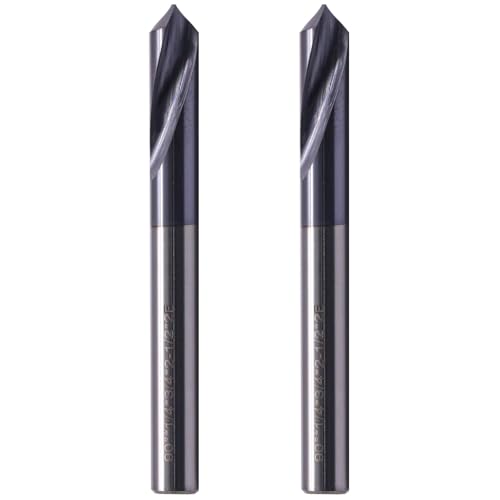
This model keeps the familiar 1/4-inch cutting and shank diameter while changing the point to 90 degrees. That makes it a close dimensional counterpart to the top 120-degree pick, but the angle is a meaningful difference for a buyer whose process calls for a flat-sided 90-degree starting feature. The listed 3/4-inch flute length and 2-1/2-inch overall length provide useful clearance information.
Its AlTiN coating, two-flute layout, and solid carbide construction are specified alongside use in steel, brass, iron, and nonferrous materials of medium hardness. The pair format is straightforward for a small CNC tool cabinet. Use the tool maker’s cutting guidance for the exact material and machine.
Pros
- Combines a common 1/4-inch shank with a 1/4-inch cutting diameter.
- Uses a specified 90-degree point.
- Two-flute solid carbide construction is specified.
- AlTiN coating is identified.
- Listed for several medium-hardness metal categories.
Cons
- The 90-degree geometry is less suitable for a job requiring a 120-degree point.
- The two-piece package provides fewer replacement tools than the five-piece smaller sets.
This is the straightforward pick for a 1/4-inch holder when the required geometry is 90 degrees. Choose the 120-degree version if that point angle is specified, or use the 3/16-inch option for a smaller matching shank and cutting diameter. here .
To buy this product, click here.
6. 5Pcs 1/8" 2 Flute 90 Degree Solid Carbide Spot Drill — Best Compact Option

At 1/8 inch, this is the smallest dedicated spot drill in the main CNC group. It uses a matching 1/8-inch shank, a 5/8-inch flute length, and a 2-inch overall length. Those dimensions make it relevant for compact hole-starting work, although the tiny shank also makes holder compatibility especially important.
The five-piece package gives a shop several matching tools, while the product description specifies two flutes, a 90-degree point, solid carbide construction, and AlTiN coating. specified applications include steel, brass, iron, and nonferrous materials of medium hardness. Small diameter does not remove the need for a suitable machine and controlled setup, so this should be selected for the hole scale rather than treated as a universal substitute.
Pros
- Provides a specified 1/8-inch cutting diameter.
- Uses a matching 1/8-inch shank.
- Includes five tools in the package.
- Has a specified 90-degree point angle.
- Uses two-flute, AlTiN-coated solid carbide construction.
Cons
- The small 1/8-inch shank requires a holder or collet that accepts that size.
- Its 1/8-inch cutting diameter is unsuitable where a larger spotting feature is required.
Choose this five-piece pack for a 1/8-inch, 90-degree spotting operation. Match the point angle to the following drill and the shank to the collet.
To buy this product, click here.
7. KEO 34144 1/4-Inch 142-Degree Carbide Spot Drill — Best 142-Degree Option
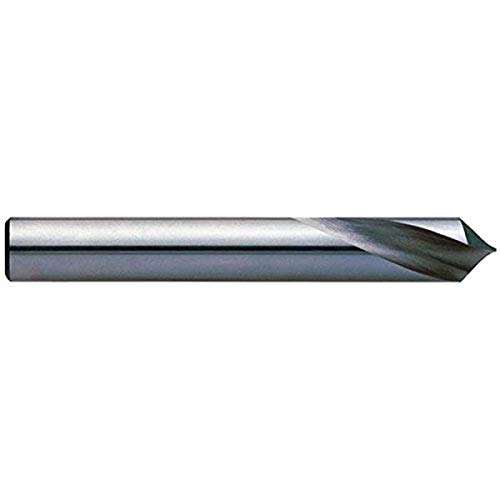
The KEO 34144 uses a 142-degree point on a 1/4-inch solid-carbide spotting drill. Its 2-1/2-inch overall length provides a shorter format than the 3-inch Titan, while the uncoated cutting surface keeps its construction straightforward.
This is a focused alternative when the process calls for a wide spotting angle. Keep the spot shallow and size it around the following drilling operation. The tool is not a substitute for a 60-degree center drill, and a 142-degree point should not be chosen solely because it is wider than the other options.
Pros
- 142-degree spotting geometry.
- 1/4-inch body diameter.
- Solid-carbide tool material.
- 2-1/2-inch overall length.
- Right-hand cutting direction.
Cons
- A single fixed point angle.
- Requires a rigid, low-runout setup.
Choose the KEO for a compatible 142-degree spotting operation after matching the following drill’s point angle.
To buy this product, click here.
8. 2Pcs 3/8" 2 Flute 120 Degree Solid Carbide Spot Drill — Best Large 120-Degree Option

This is the larger counterpart to the top 1/4-inch 120-degree pick. It has a 3/8-inch cutting diameter, a 3/8-inch shank, a 1-inch flute length, and a 2-1/2-inch overall length. Those dimensions make it a substantial spotting tool, so the holder, available clearance, and required starting diameter should be checked before purchase.
The AlTiN coating and two-flute solid carbide construction are clearly listed, along with intended use in steel, brass, iron, and nonferrous materials of medium hardness. Its 120-degree point gives the buyer a specific geometry rather than a generic conical cutter. The two-piece package is suited to a shop that wants a matching spare, but the larger shank means it will not replace a 1/4-inch tool in a smaller collet.
Pros
- Offers a specified 3/8-inch cutting diameter.
- Uses a matching 3/8-inch shank.
- Provides a specified 120-degree point angle.
- Includes a 1-inch flute length.
- Combines two flutes, solid carbide, and AlTiN coating.
Cons
- The 3/8-inch shank limits compatibility with smaller holders.
- The larger diameter may be unnecessary for small pilot-hole locations.
This model is the better fit for a larger 120-degree starting feature and a machine equipped for a 3/8-inch shank. Buyers needing the same angle in a more compact format should look at the 1/4-inch or 5/16-inch versions instead. here .
To buy this product, click here.
9. 2Pcs 5/16" 2 Flute 120 Degree Solid Carbide Spot Drill — Best Mid-Size 120-Degree Option

The 5/16-inch model occupies the space between the 1/4-inch and 3/8-inch 120-degree tools. Its cutting diameter and shank both measure 5/16 inch, while the 13/16-inch flute length and 2-1/2-inch overall length are specified for setup planning. That middle size can be useful when a 1/4-inch spot is too small and a 3/8-inch cutter is more than the job requires.
As with the other dedicated spot drills here, the product description specifies two flutes, solid carbide, AlTiN coating, and use in steel, brass, iron, and nonferrous materials of medium hardness. It comes as a two-piece set, giving the buyer a matching spare. The central trade-off is simple: this is a useful size-specific tool, but it cannot serve holders set up for 1/4-inch or 3/8-inch shanks without appropriate compatibility.
Pros
- Provides a specified 5/16-inch cutting diameter.
- Uses a matching 5/16-inch shank.
- Has a specified 120-degree point.
- Includes a 13/16-inch flute length.
- Uses two-flute, AlTiN-coated solid carbide construction.
Cons
- The 5/16-inch shank requires a holder or collet of the same compatible size.
- The two-piece package offers less quantity than the five-piece 1/8-inch and 3/16-inch sets.
This is a sensible pick for a mid-size 120-degree spotting requirement that falls between the two more common diameters. Choose the 1/4-inch model for a smaller holder or the 3/8-inch model for a larger starting feature. here .
To buy this product, click here.
Buying Guide
Following Drill Point Angle
Follow the subsequent drill maker’s spotting guidance. For carbide drills, the spotting angle is generally wider than the following point so the center engages first. A 90-degree spot is not a universal choice.
Shallow Spotting
Size the shallow spot for the next operation rather than using a spotting tool as a full-depth drill. Check runout, rigidity, and the material application of the coating or uncoated carbide.
Center Drill Difference
A center drill forms pilot and countersink geometry for lathe-center support. Its 60-degree profile serves a different task from spotting for a following twist drill.
Our drilling-tool guides by operation keep spotting, full-hole drilling, and core-style cutting in separate groups.
Frequently Asked Questions
Is a center drill the same tool?
No. Select for either the hole-starting or lathe-center-support operation.
Is 90 degrees always best?
Match the following drill’s guidance, especially with carbide drills.
Why compare 140 and 142 degrees?
They provide wider point options; select by the subsequent drill rather than a performance ranking.
Final Verdict
2Pcs 1/4" 2 Flute 120 Degree Solid Carbide Spot Drill is the starting point for buyers who need its configuration. This is the best starting point for buyers who need a conventional 1/4-inch CNC spotting drill and can verify that their toolholder accepts the matching shank. Choose a 90-degree model for a different point requirement, or move to the 3/8-inch options for a larger opening. here .
For a different requirement, compare 5Pcs 3/16" 2 Flute 90 Degree Solid Carbide Spot Drill and 2Pcs 5/16" 2 Flute 120 Degree Solid Carbide Spot Drill. Follow the subsequent drill maker’s spotting guidance. For carbide drills, the spotting angle is generally wider than the following point so the center engages first. A 90-degree spot is not a universal choice.
